
Frankenstein Costume Analysis
Only Monsters Play God

How many times do we think I have to watch Guillermo del Toro’s Frankenstein before I stop crying while watching it?
While everyone was dreading having to read Frankenstein in my high school AP Literature class, Mary Shelley was providing me with a life altering experience. Throw my love for del Toro’s films into the mix and you can only begin to imagine how much this movie means to me. Granted, the movie does differ from its source material, but I’d say it’s done in a way that still makes sense and is very understanding of the novel. I, like everyone else, felt incredibly maternal towards the creature, however, I also felt very represented by him in a way that made me feel very exposed. Also, this version is Catholic as hell, and to all my fellow cradle Catholics, you know that shit never leaves you completely.
Anyway, as much as I’d loooove to discuss my thoughts about the movie as a movie, I am not a movie critic. We’re here to analyze the costume design and how it helps tell the story. These are always my favorite posts to write, because as an actor and a fashion write I’m able to bring my two worlds together, and I really appreciate so much that you guys enjoy these too!!
I feel like most are familiar with the story of Frankenstein, and if at this point you aren’t, I don’t think I should be held accountable for spoiling anything for you, but still, light spoilers ahead.

Our story begins when a very badly injured Victor Frankenstein is brought aboard a Royal Danish Navy expedition ship trapped in ice. He tells the captain that he is responsible for the Creature attacking the captain’s crew, and recounts the events that lead to the Creature’s creation. Victor’s story starts in childhood, covering the loss of his mother, his mommy issues, his daddy issues, his maddening dedication to science, his need to cheat death, his building and animation of the Creature, his love for his brother’s wife Elizabeth, his jealously of Elizabeth’s connection with the Creature, and his trying to kill the Creature. At this point in the story, the Creature manages to board the ship and begins to tell his side of the story. After freeing himself from the explosion that Victor caused, the Creature finds shelter in a small hovel where he observes a family and becomes friends with a blind old man who teaches him how to speak English. He discovers that he cannot die and so he finds Victor on the night of Elizabeth’s wedding and asks Victor to make him a companion. Victor refuses and so the Creature attacks him. Elizabeth discovers them and embraces the Creature before Victor accidentally shoots her and she dies in the Creature’s arms. In present day on the ship, Victor uses his final breaths to apologize to the Creature, calling him ‘son’, and the Creature forgives him, calling him ‘father’. Then the creatures helps push the ship out of the ice and onto the open water, before walking off into the sunlight that Victor once taught him was life.
Now that we’re kind of, sort of up to speed, costumes were done by Kate Hawley, and if at any point you were like, hey, this kind of reminds me of Crimson Peak, that’s because she also did the costumes for that.
Although Frankenstein is mainly set in the 1850s, del Toro told Hawley that he didn’t want to see a sea of all black and top hats. He wanted color, and so delicious color is what he got. Although the costumes aren’t entirely period accurate, there’s still a gothic romance to them that plays nicely into the more fairytale approach.
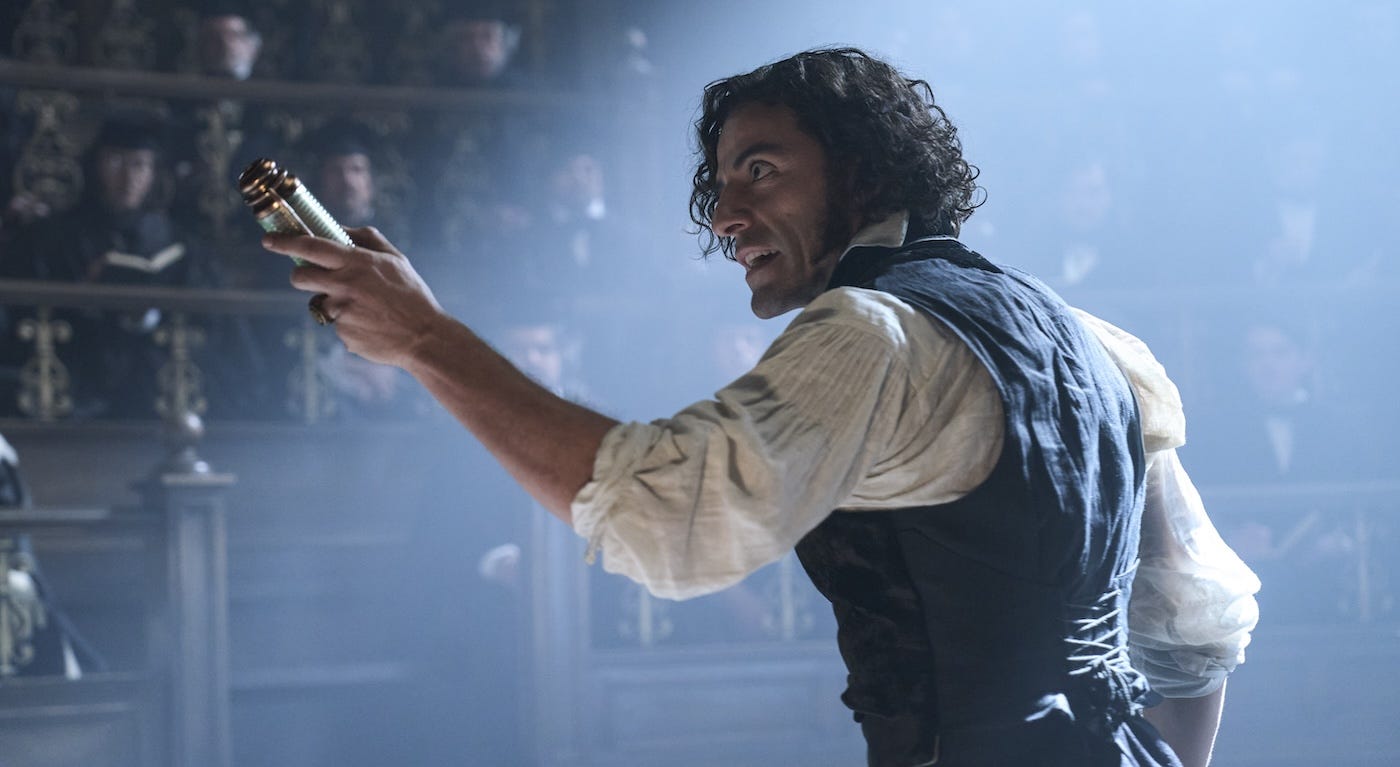
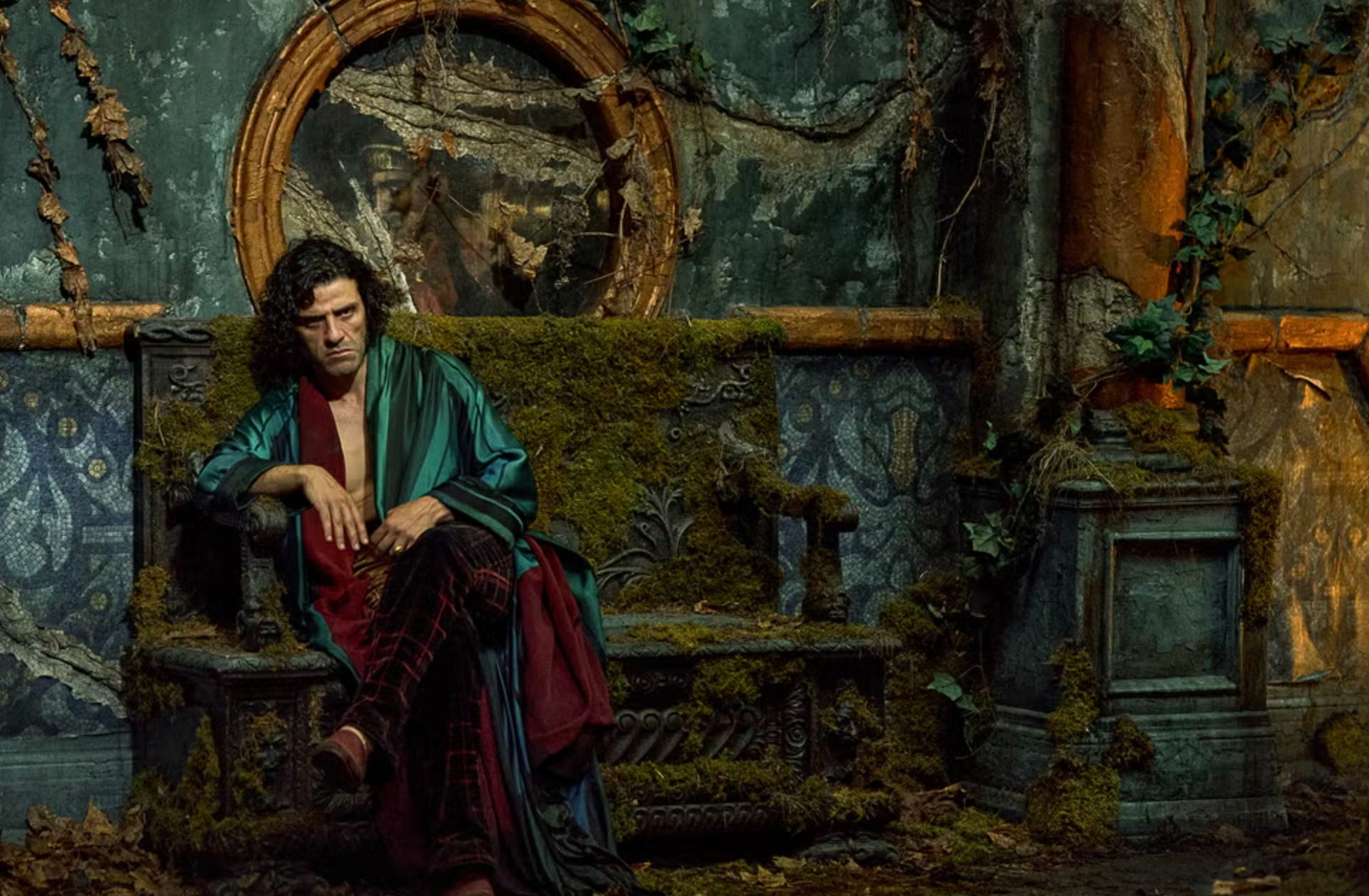
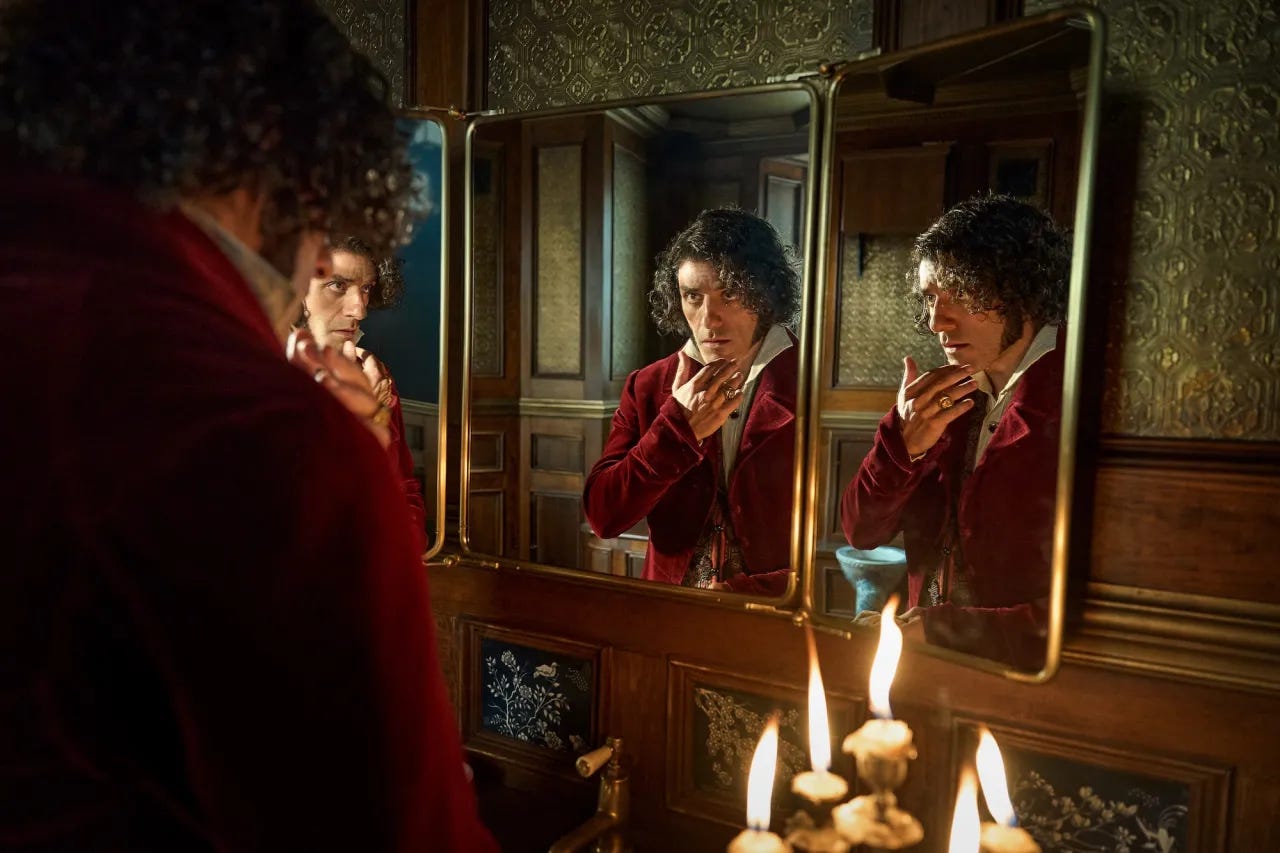
So we begin with Victor— our brilliant and egotistical scientist. His physicality was inspired by the likes of Prince and David Bowie, and I think that source material might have bled into his wardrobe as well. Victor comes from the aristocracy, but he no longer has money. Although his clothes are nice, they are worn, and there’s something very rockstar about just throwing clothes on for no other reason than that you have to. After meeting Harlander he stays quite crumpled, but becomes a lot more flamboyant and embraces his innate dandyism. Using fashion theory, we can think of the dandy as a modern priest, sanctifying artifice in an age that worships authenticity. As a dandy, Victor’s dress performs genius, alienation and ruin. It’s defiant, and dressing him as a creature of anachronism makes visible the logic of his myth: the impossibility of keeping creation confined to its time. Yet, he believes himself to be a Picasso of his craft— more divine artist than mere scientist.
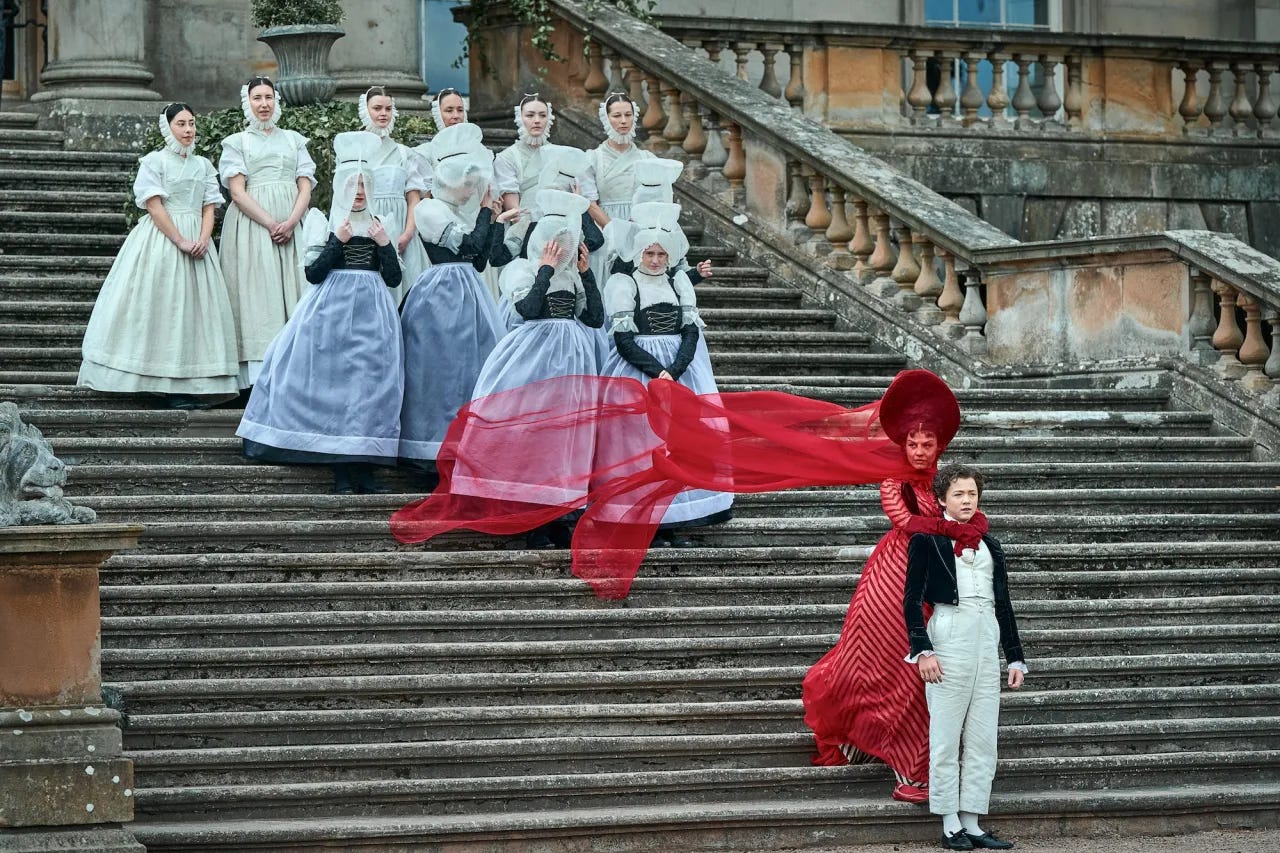
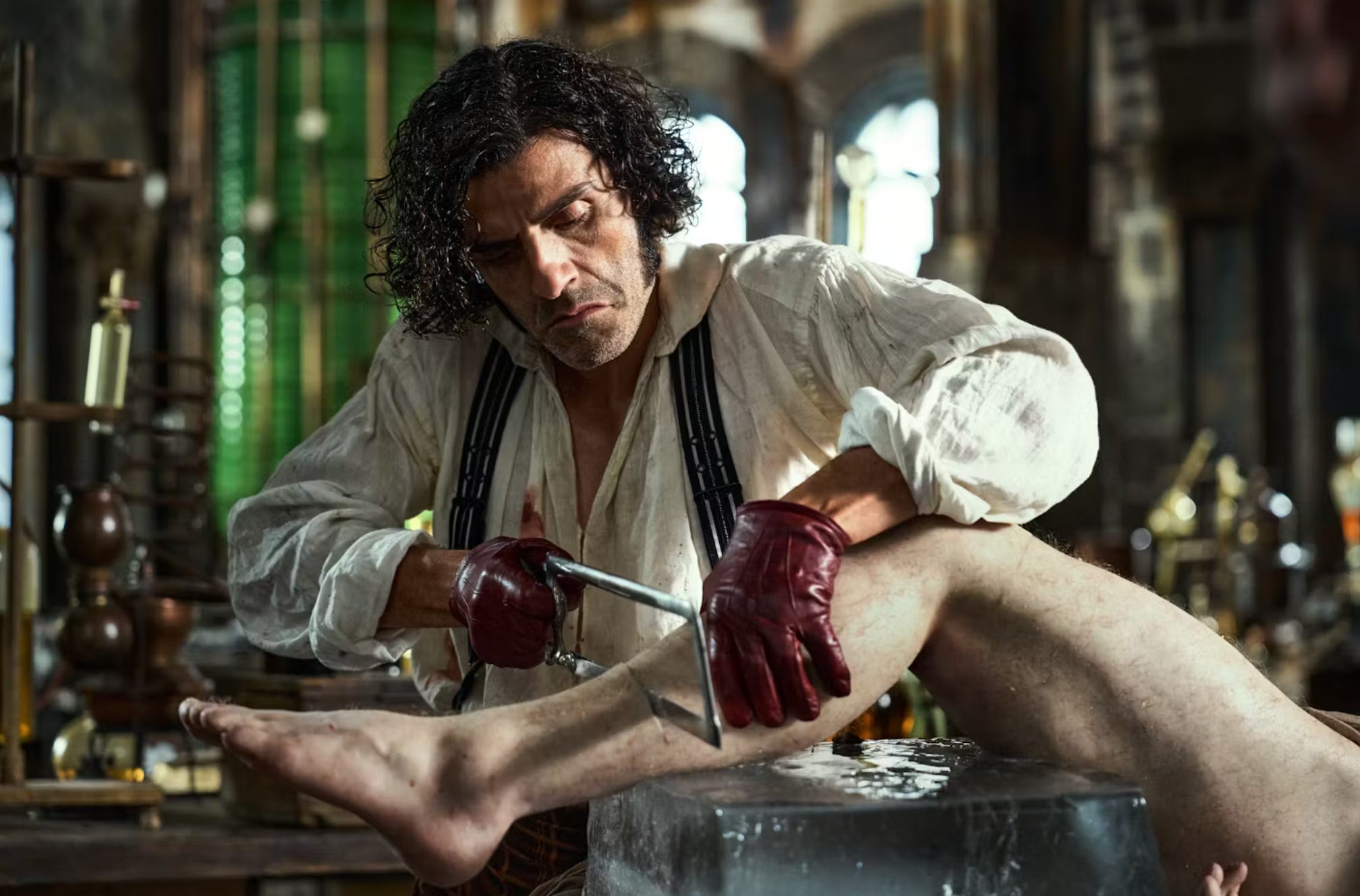
The color grading in this movie might as well be its own character and red is really only seen in relation to Victor. It begins with one of the most striking shots of the whole movie: Victor’s mother, Claire, wearing all red as her veil blows in the wind against a background of black and white. She stands out, she doesn’t belong, she’s the object of all Victor’s affection. Her blood soaked hand print on his face later becomes the red of his scarf, velvet jacket, and gloves. Not only is red an obvious connection to his mother, but also a way to show the blood on his hands in creating the Creature. In creating life, he performs a perverse Eucharist.
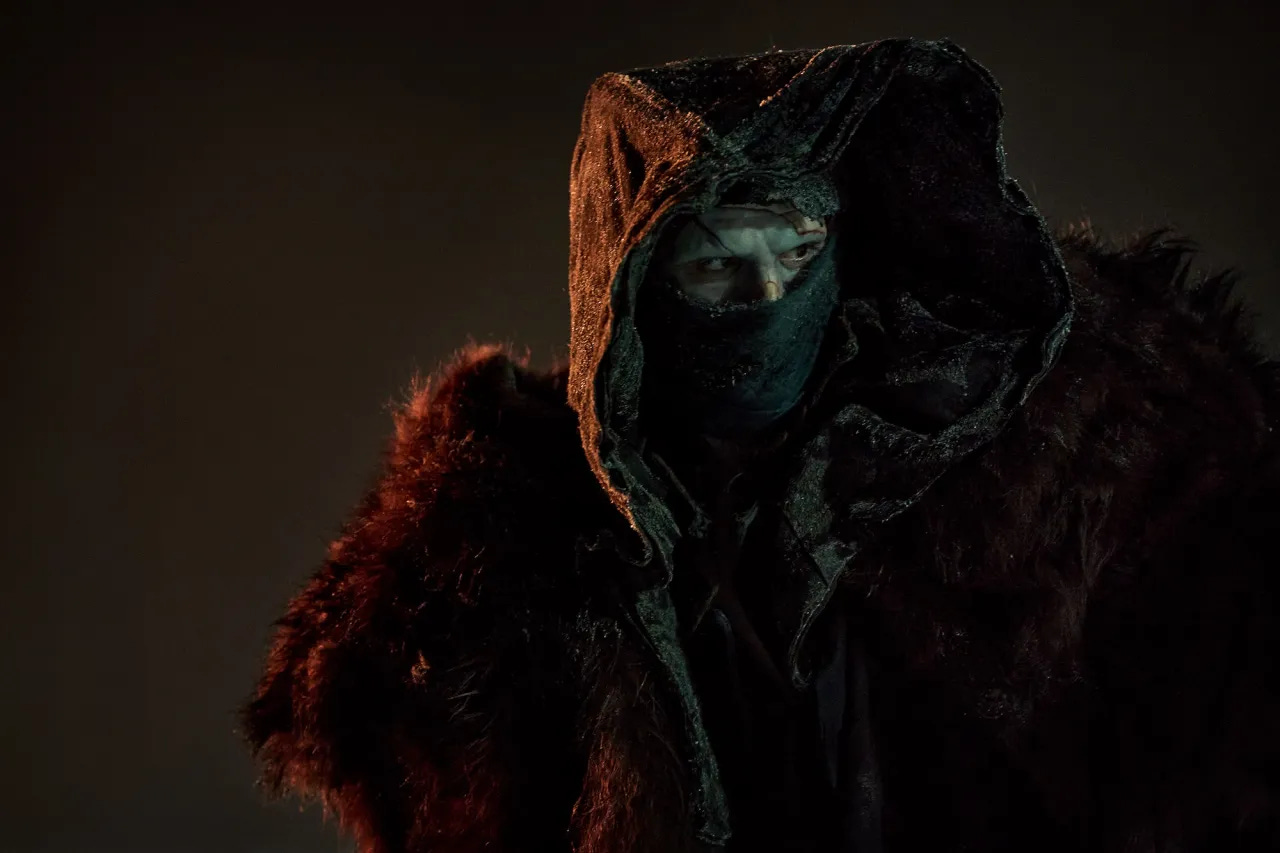
In his barely there bandages, the Creature is Christlike. His wrappings recall both the medical and the sacred: surgical dressings and burial clothes, mummification and swaddling. He is the creation of a man playing God, wile also being an infant without any enrichment to help him grow and develop. The Creature is naked, not merely in the literal sense, but in lacking the codes and comforts that clothing provides. His first piece of clothing is from a dead man and you can see that it has disintegrated into the man’s skeleton. In conversation with WWD, Hawley said, “In Guillermo’s script he talks a lot about the Creature’s sense of memories, and other memories being part of his complete consciousness. And that coat is almost like the memory of another man.” Another part joining the rest. The other clothes he acquires along the way provide comfort, protecting him from the elements, while also being affected by them in a way he never will be. His color palette is drained of blood— color as deprivation, leaving him as an obvious outsider. The creature would love Ann Demuelemeester and its poetic, dark romanticism, me thinks.

Elizabeth’s wardrobe is rich with color, and the prints of her dress are inspired by blood cells, beetles, malachite, x-rays, etc. Her most notable piece is a carnelian rosary necklace that Hawley told Harper’s BAZAAR was “nature meeting religion.” The necklace rests on the pulse point of her throat— the site of breath, voice, and vulnerability— signaling the precarious boundary between life and its cessation. It’s a staple for her, almost like a talisman providing her protection, encouraging her to trust her instincts.
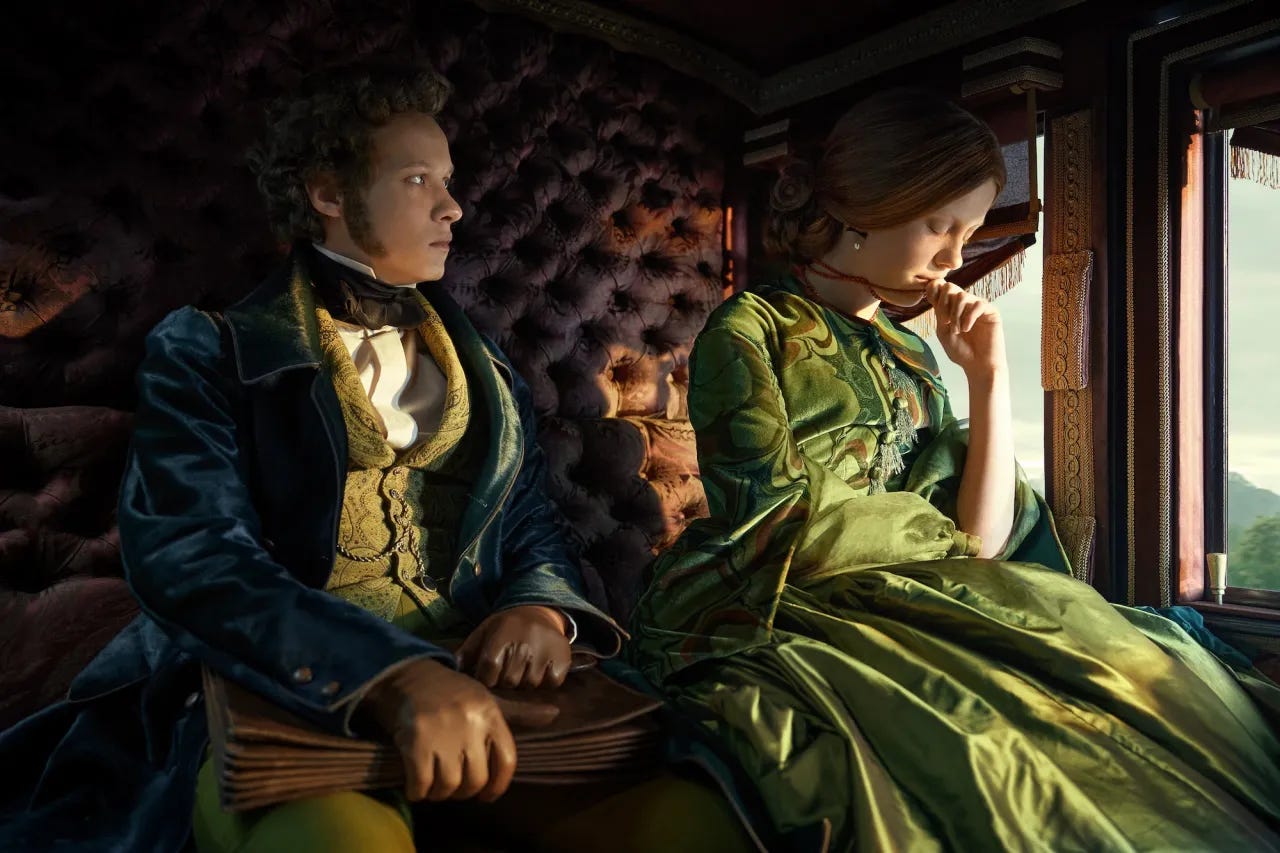
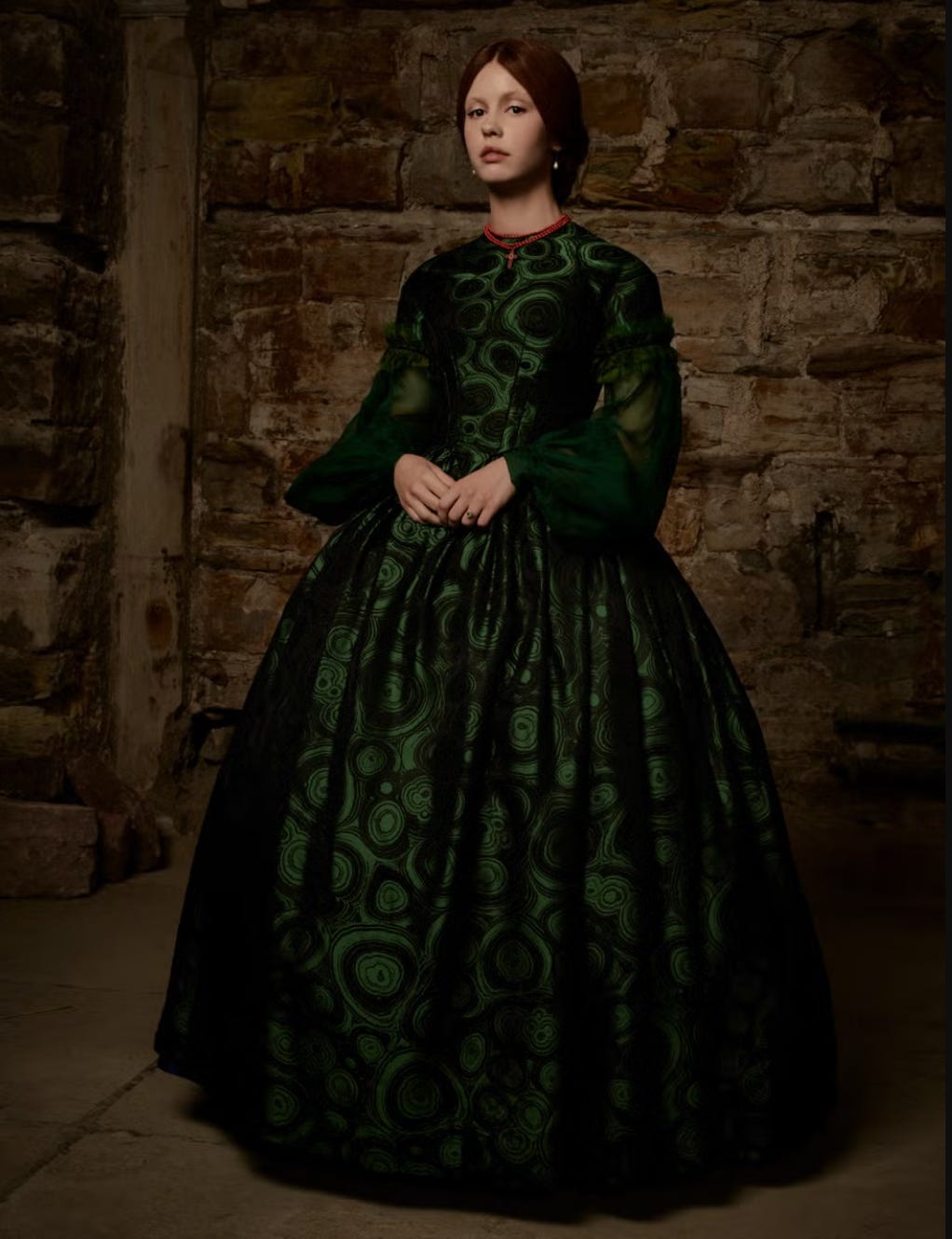
She brings green into the color story, representing nature. Like a beetle, she is in a stage of metamorphosis, making her feel ephemeral. Her blue, x-ray dress adds to her fleeting existence, and also parallels her transparency as a person. She wears this dress when first meeting Victor, and immediately speaks her mind when in conversation with him. Then when Victor sees her in a crowd, she’s holding the one red umbrella in a crowd of black ones. Underneath she wears a yellow bonnet that is quite saintly, but is also yellow like the sun, which Victor later tells the Creature he should embrace because it is a source of life. As Victor starts to fall for her more, a mere red umbrella in a crowd turns into a red dress that is laced up in a way that resembles an exposed spine. The flowers in her bonnet also call back to those in Claire’s coffin just in case you weren’t sure if Victor had mommy issues or not. Victor confesses his feelings for her while she’s in this dress, but she denies him, taking the opportunity of the few choices she is able to make in her life. She grabs her blue veil and runs off.
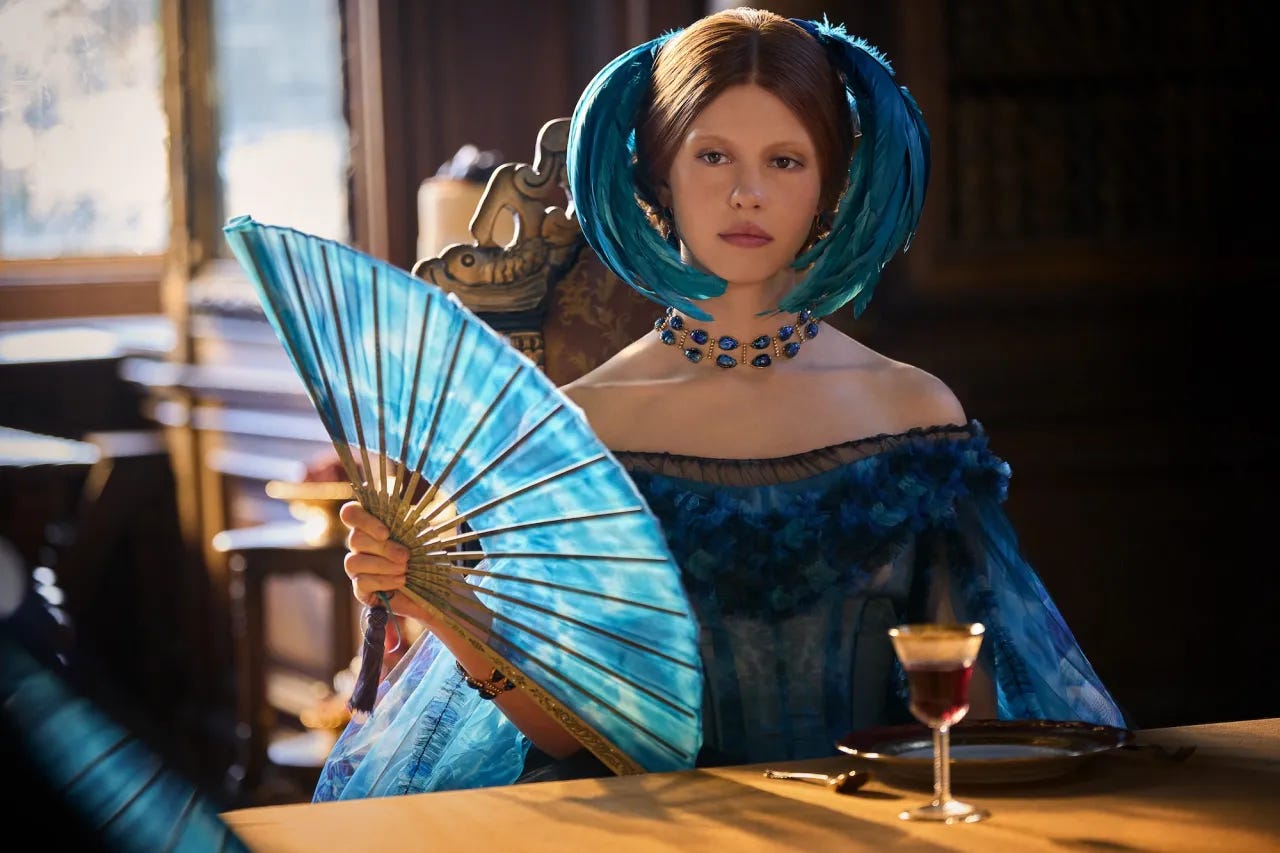
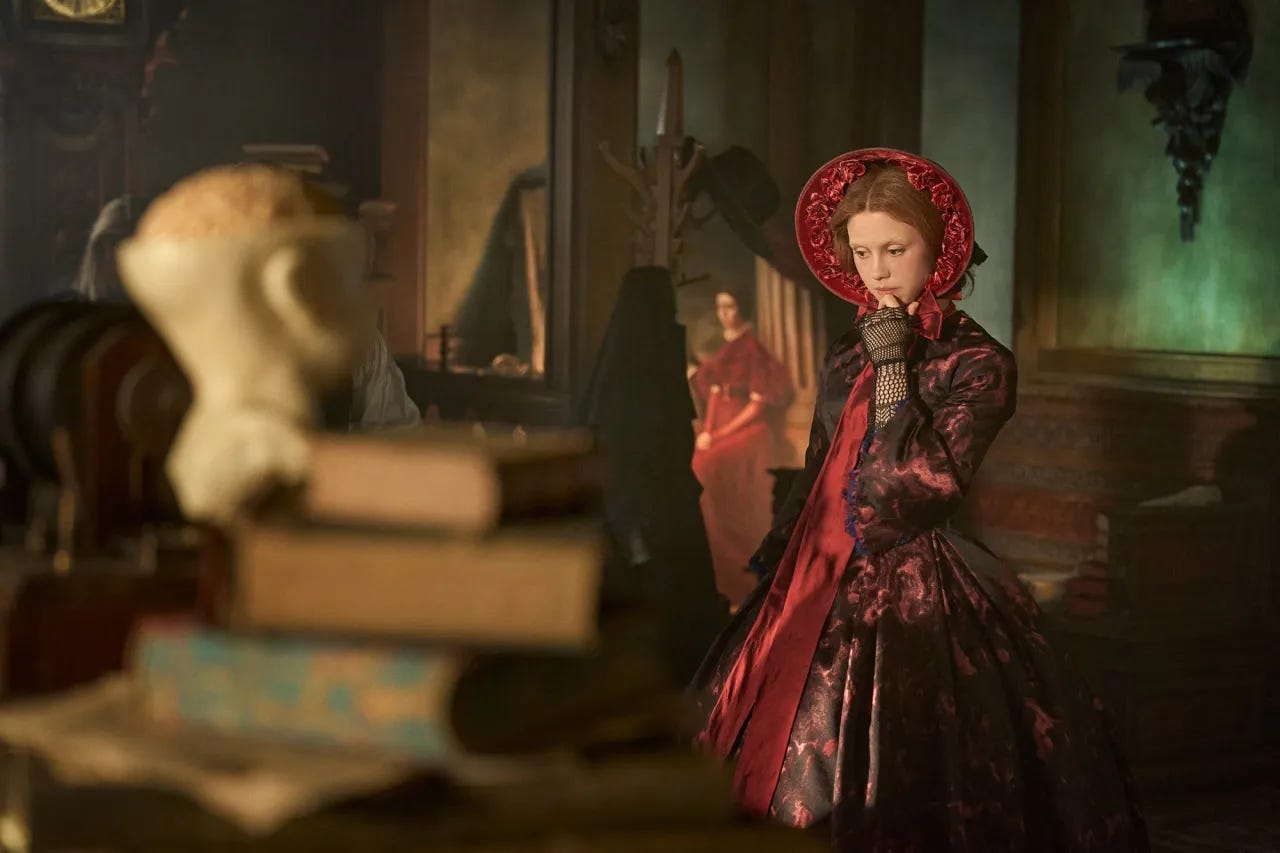
This veil is almost a fabric of distance. Through it, Elizabeth becomes a study in permeability— a living x-ray, flesh turned radiance. The x-ray dress is a mere flash, there one second and gone the next, but the veil is more intimate; it reveals. She wears it when meeting the Creature for the first time, with him being the only person she unveils herself to, both literally and metaphorically. To him, she is warmth, the first time he’s ever been shown tenderness. It’s a moment of vulnerability where two people are seeing each other for who they are instead of projecting ideas onto one another. This makes her very Bride of Frankenstein dress quite fitting (I also believe this was the third character that Mia Goth was supposed to play, but it was cut). Her Swiss ribbon bodice is reflective of the time period, but also makes one think of a rib cage, while her laced up arms look like the Creature’s (and his Bride’s) bandages. Then the white of her dress being penetrated by her red blood brings us back full circle to the beginning of the movie.
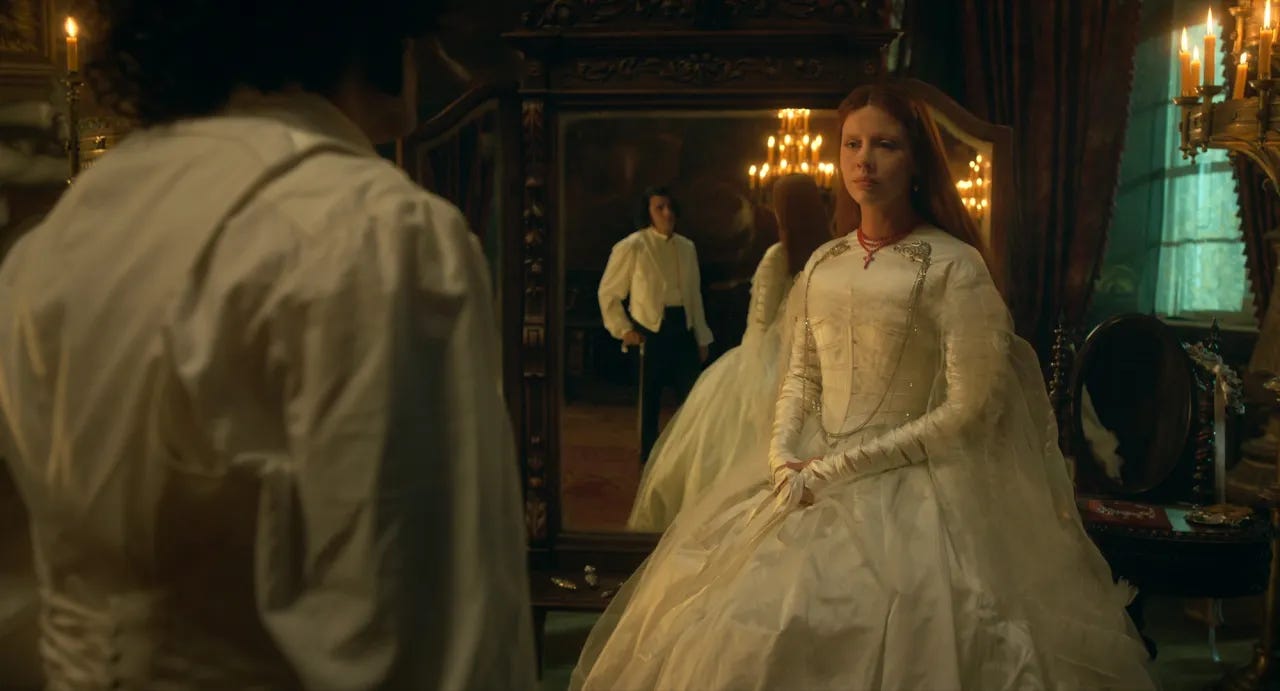
In Guillermo del Toro’s Frankenstein, costume design transcends historical fidelity to become an anatomy of emotion. Beneath its Gothic spectacle lies a profound metaphysical argument: that every act of creation carries within it the seed of destruction, that beauty and ruin are coextensive, and that to be seen is already to begin to fade.
Alright, gonna go watch and cry again.
TTYL!!!
xx
loved ur analysis, bravo! i got to watch this in the theater & feel so lucky i did